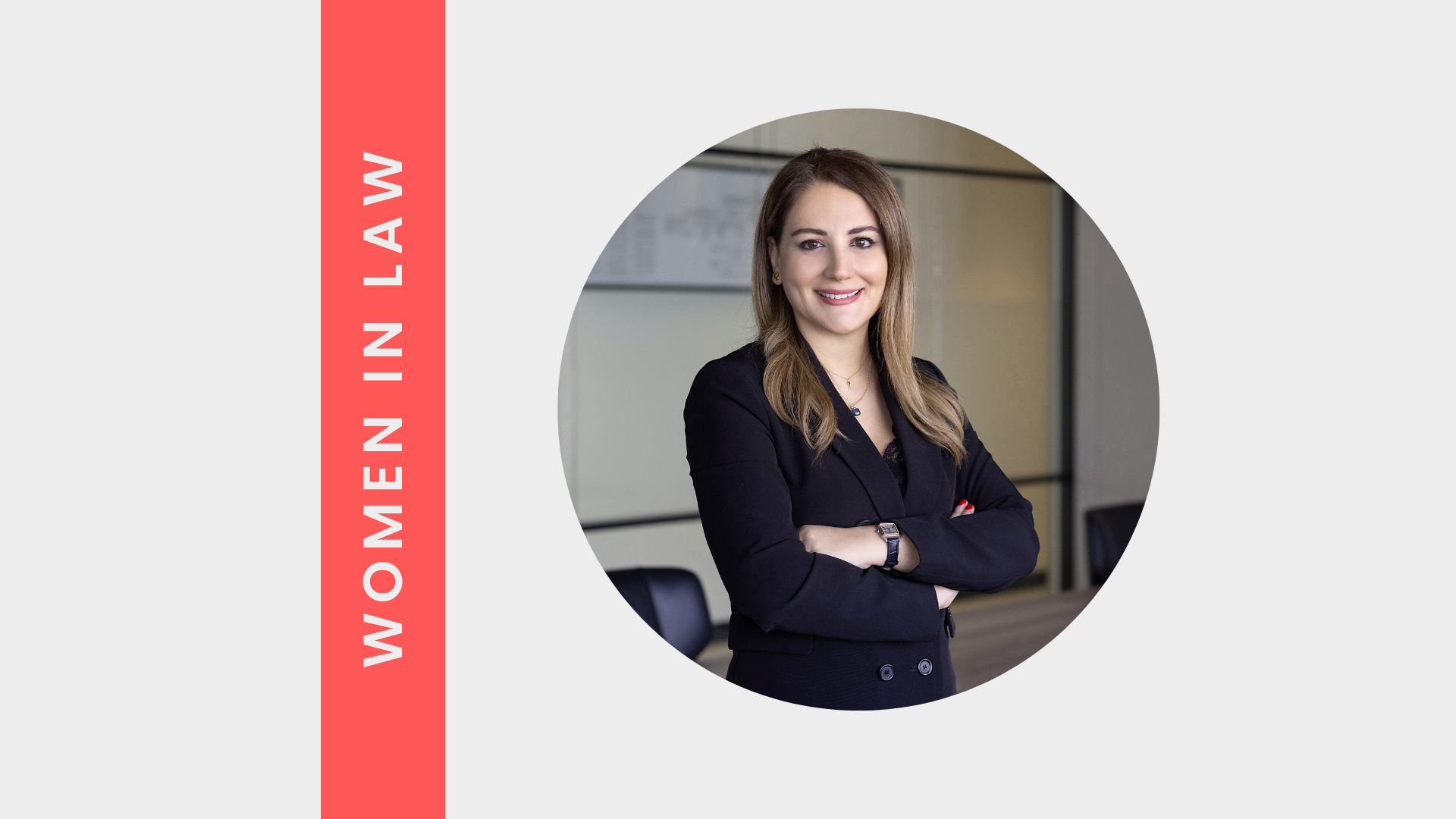
Rising Legal Star: Neisha Joseph
Introducing Neisha Joseph
Neisha Joseph is a UK-qualified lawyer and Legal Counsel at Khazna Data Centers - the leading data center developer and operator in the UAE. She has a focus on corporate and project finance. Prior to moving in-house, Neisha spent 4 years at a US law firm in Dubai and trained at an international law firm in London.
We spoke with Neisha Joseph about her journey into law and the experiences that shaped her decision to build her career in the Middle East. From early exposure to finance-driven legal work to advising on complex, large-scale projects, Neisha reflects on the moments that defined her path and continue to influence how she approaches her role today.
Can you tell us about your journey to becoming a lawyer and what led you to pursue your career in the Middle East?
I studied law at university and completed vacation schemes at City law firms, but by the time I graduated I wasn’t convinced that a training contract was the right next step for me. What really captured my interest in my final year was the “Law of Finance” module and it made me start thinking more seriously about roles where legal analysis sits closer to commercial decision-making.
That led me into a ten-week internship in the compliance department of an international investment bank in London, working alongside the equities trading business. I found the environment incredibly dynamic and intellectually stimulating, particularly the way compliance operates at the intersection of law, strategy, and real-world outcomes. I was offered a full-time role and spent the next four years there, where I realised I most enjoyed complex commercial issues, specifically situations where legal judgment directly shaped how the business operated.
After 4 years at the bank, I decided to formalise my legal career and undertook a training contract with an international law firm in London. During my third seat, I applied for an international secondment and was posted to the firm’s Dubai office, working within the project finance team. From day 1, I was thrust into working on a project financing transaction involving the construction of the world’s largest reverse osmosis desalination plant and my experience piqued my interest in continuing on with my legal career in the UAE.
The decision to qualify and build my post-qualification career in the Middle East was very intentional. I was drawn to the scale of project development and the region’s growth ambitions, and I wanted to be in a market where legal work actively enables that growth, particularly in infrastructure and energy. That sense of contributing to long-term, tangible projects which would contribute to the growth of economies in the Middle East is what ultimately anchored me here.
What have been some of the most rewarding moments in your legal career so far, and how have they shaped you professionally?
Some of the most rewarding moments in my career have come from seeing the projects I have worked on move from legal documentation into physical reality. Visiting project sites or seeing completed projects reported in industry publications creates a strong sense of professional satisfaction, because it makes tangible the fact that the work done behind the scenes translates into real-world infrastructure with lasting economic and social impact.
That said, many of the most formative moments in my career have been quieter and less visible. Early on, I found it particularly affirming when clients or internal stakeholders would reach out to me directly for input, signalling that my judgment was trusted rather than simply my technical execution. Those moments marked a shift from being a contributor to being an adviser.
More recently, I have found professional fulfilment in situations that require stepping into ambiguity, where the legal framework is imperfect, the commercial facts are evolving, and there is no textbook solution or precedent to adapt from. Taking ownership in those circumstances, and helping shape a pragmatic path forward, has been instrumental in developing both my confidence and my judgment. Each of those experiences has incrementally strengthened my ability to advise with clarity, perspective and commercial awareness.
Have you ever felt pressure to ‘fit’ a certain image of what a lawyer should be and how do you stay authentic?
When I was at the early stages of my career I felt that there was an unspoken template of what credibility looked like, and I tried to emulate that but it didn’t feel authentic. Of course, there is an element of having to conform to your professional environment and there were some good traits to be adopted from people I respected professionally, however I now think that being true to yourself is a professional asset. People respond well to clarity, calm and integrity far more than performative confidence, so now I focus much more on substance, specifically honing my technical skills, commercial awareness and having the confidence to be honest about what I do and do not know, but proactively working to plug gaps in my skill set whenever I identify them. I found that once I stopped trying so hard to fit a certain image, I had greater mental clarity and it created space to do my best work.
What strategies or mindsets have helped you build credibility and confidence in a competitive environment?
For me, credibility has come from consistency on trying to be incrementally better each day, rather than striving for impressive moments. Of course, I aim to maintain high standards for myself and clients, however I think that credibility is built gradually through being prepared, following through on promises to deliver, pro-active communication and being dependable over time. I’ve also learnt that confidence and ego are separate; and that I don’t need to dominate a room or know the answers to everything to feel confident, instead I believe that it’s much more important to ask the right questions, listen carefully, take sufficient time to think critically about legal risk and proactively solicit and address constructive feedback received from others.
What advice would you give to young women considering a move to the Middle East or looking to advance their legal careers in international markets?
Firstly, I would encourage young women not to underestimate how transferable their skills are. Legal training travels well across jurisdictions; while the context may change, the core analytical, judgment-based skills remain highly relevant. Secondly, curiosity is essential, both in researching a new market from the outside and in engaging with it once you are there. Approaching an international move with openness rather than apprehension allows you to learn from local nuances and cultural differences that ultimately sharpen your perspective as a lawyer.
My final piece of advice is to give yourself permission to evolve. Careers rarely follow a straight line, particularly in international markets. At various points since my move to the Middle East, I questioned whether I was making the “right” decision, but in hindsight, the most meaningful growth came from taking calculated risks and remaining adaptable. International careers tend to reward courage, self-belief, and flexibility, and these are qualities that are built by actively using them.
--------------------
We're committed to enabling our clients and candidates to thrive in a constantly changing world. By helping businesses grow and supporting people in leading more fulfilling lives both at work and beyond, we aim to make a lasting impact. Our ultimate goal is to become the world’s most valued and trusted workforce solutions company, trusted by our people, our clients and our communities.
Our latest insights